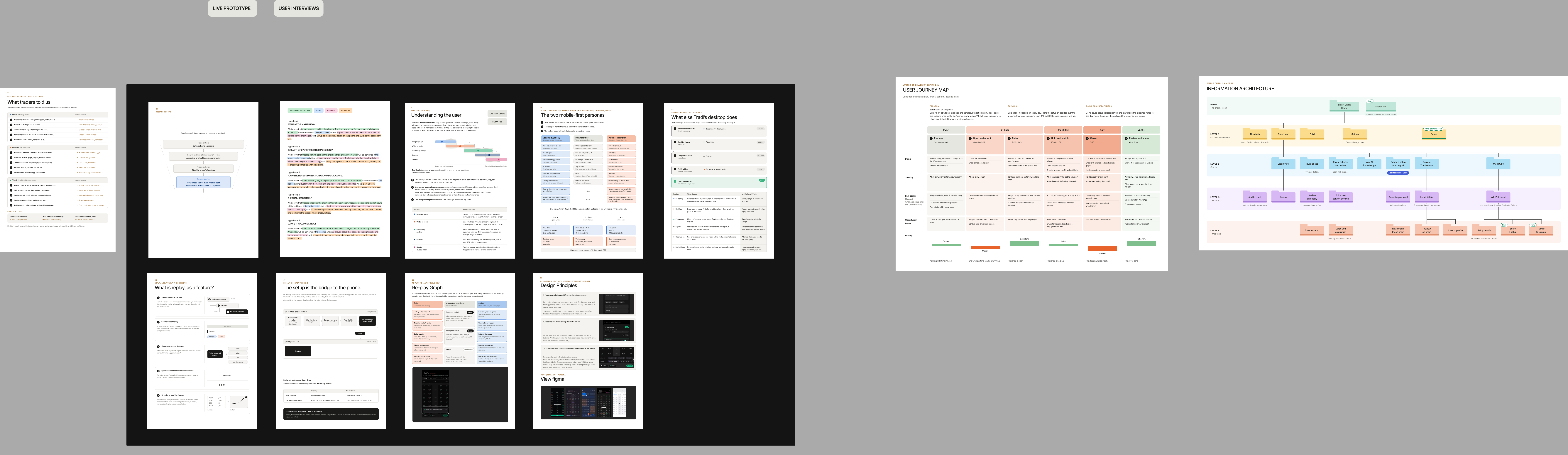
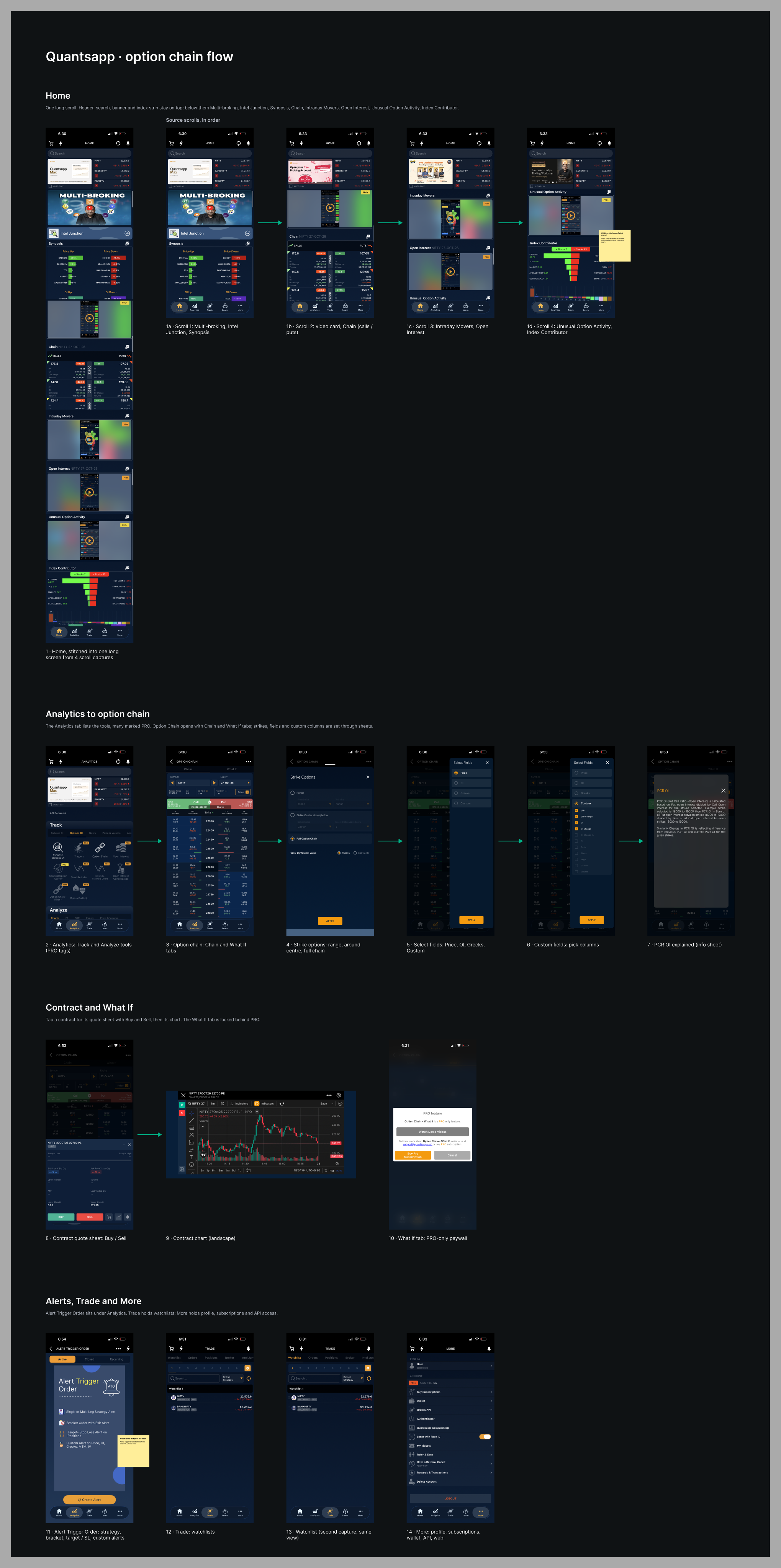
The phone is for checking, not building
1 in 3 tried it on a phone, fewer than 1 in 20 visits happened there, and only 2 built there.

Smart Chain is in beta and has never been designed for the phone.
Smart Chain is Tradl AI’s do-it-yourself option chain for Indian F&O traders. Traders describe their own version of the chain in plain English, and AI builds that logic. The version can be saved and shared as a setup. It works on the web and has never been designed for a phone.
Tradl AI is an AI co-pilot for Indian traders that covers the whole trade. Traders understand the market with Screening and Stockvision, shortlist stocks, compare and rank them on a leaderboard, and backtest their strategy, all by describing what they want in plain English.
Key takeaways:
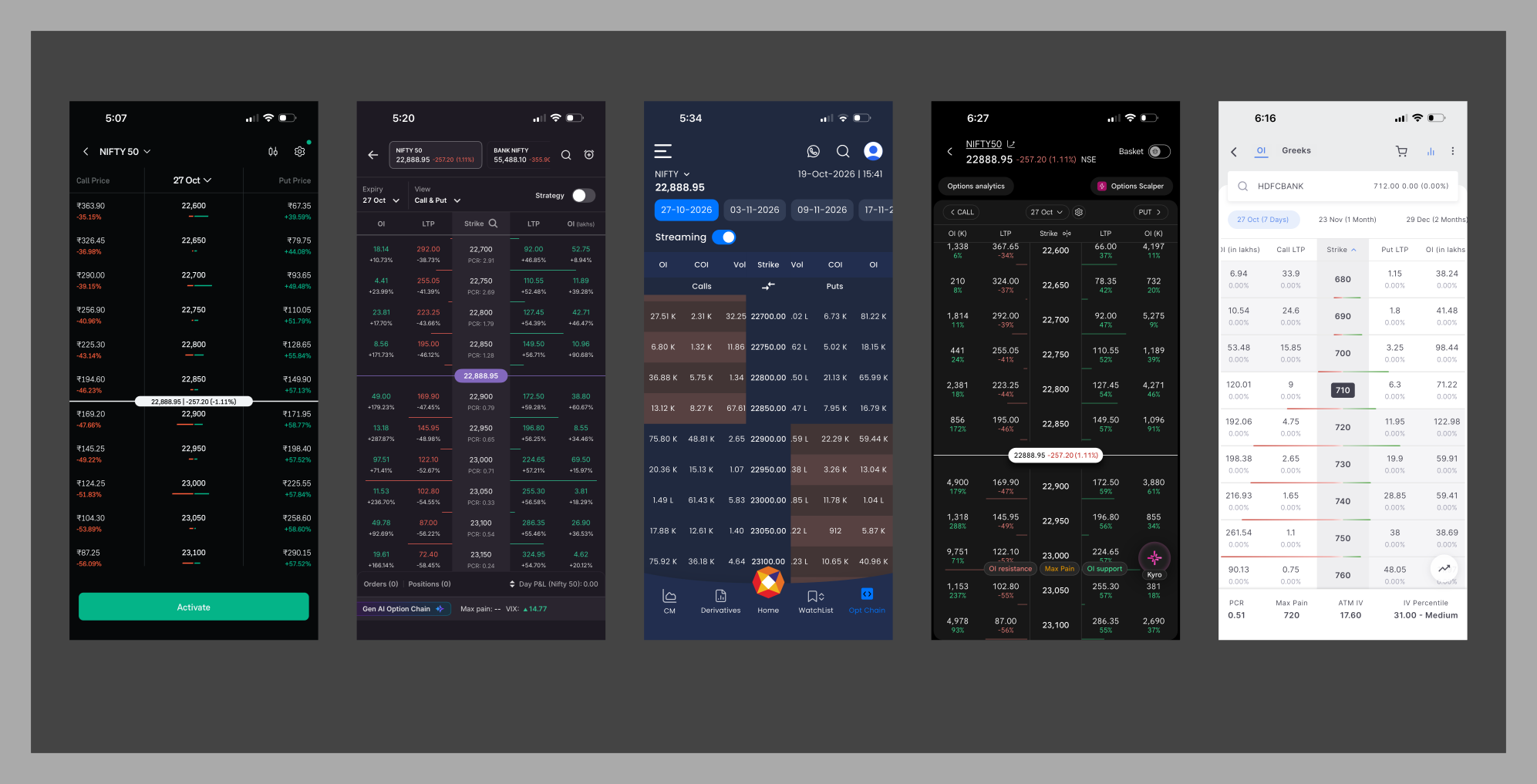
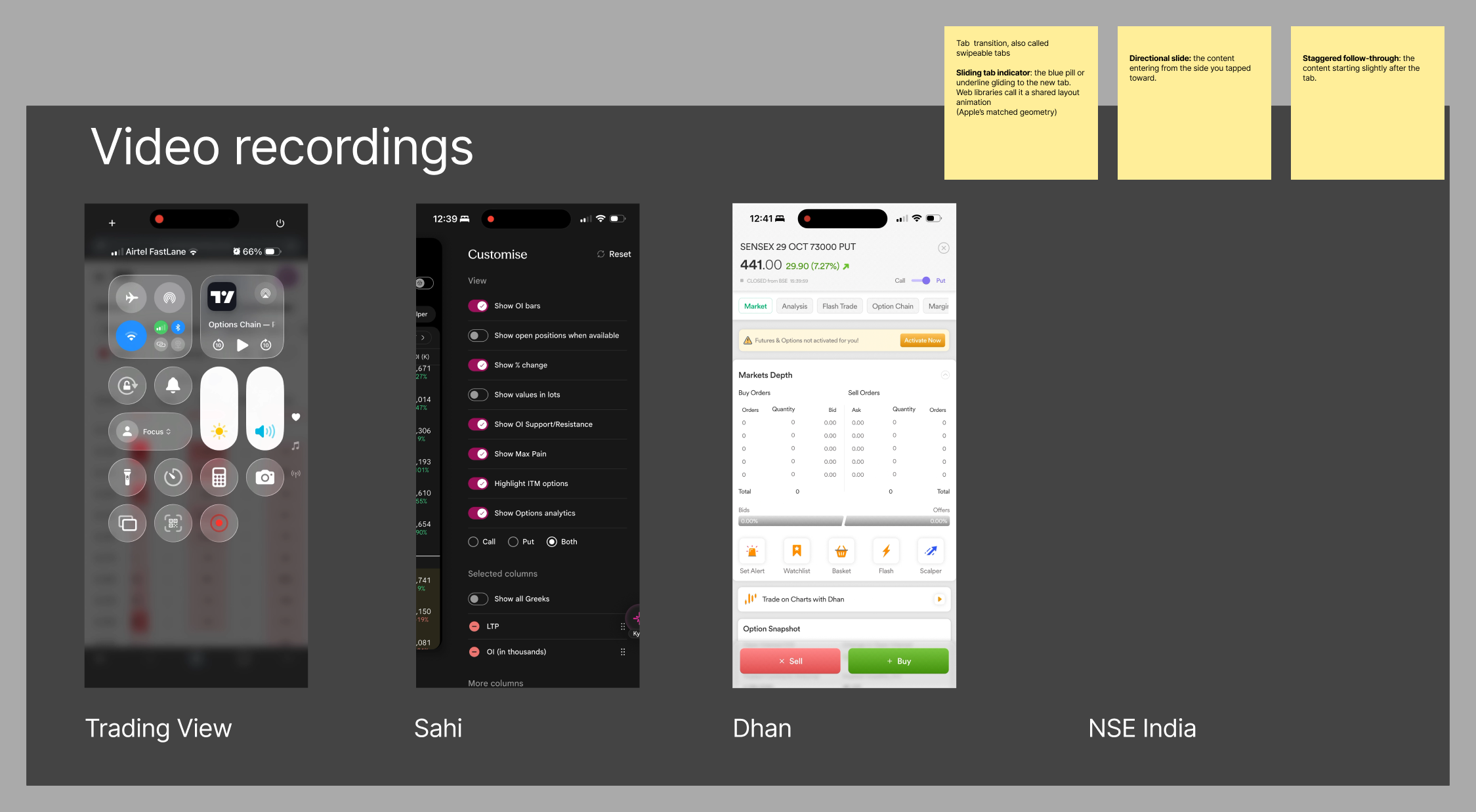
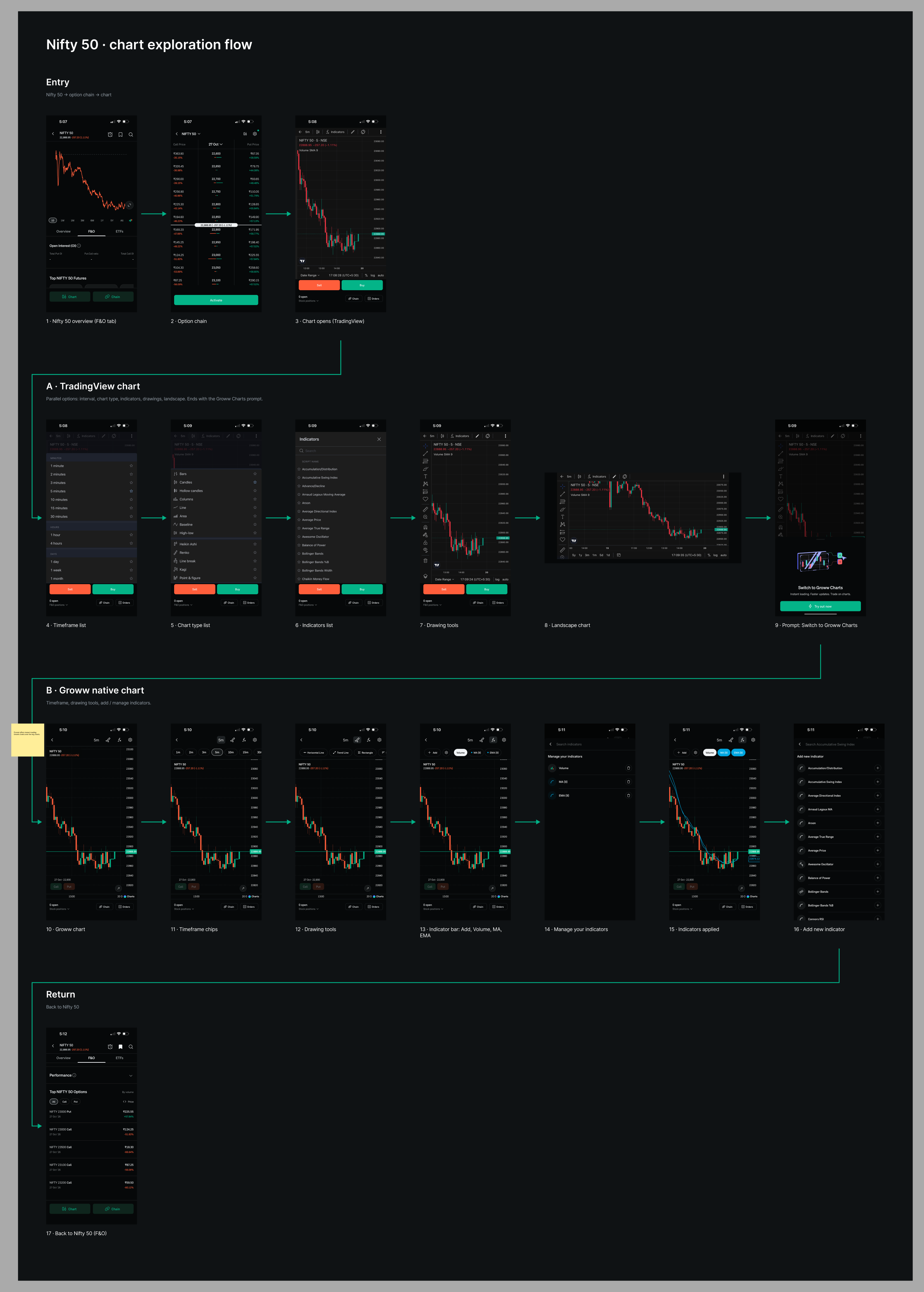
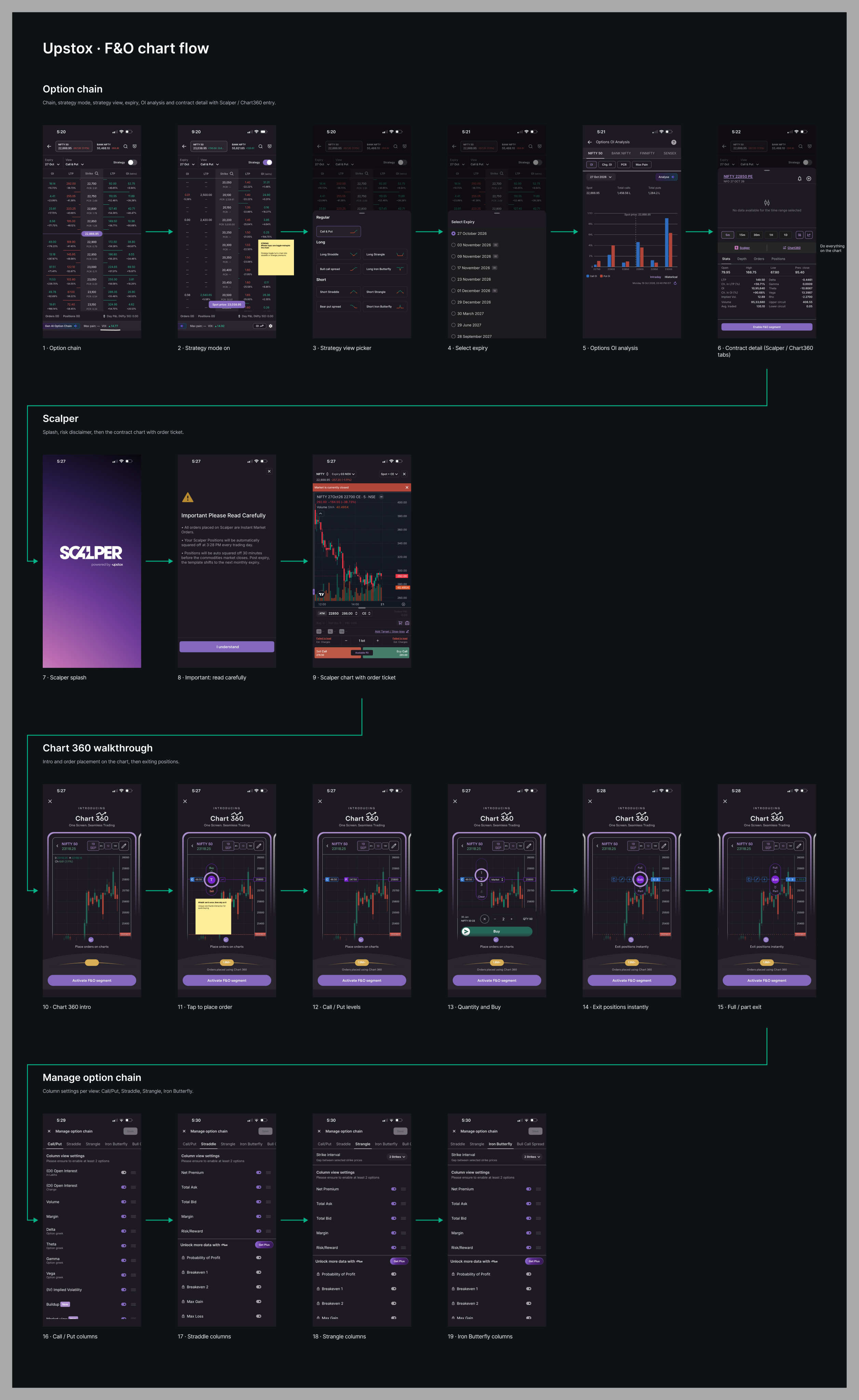
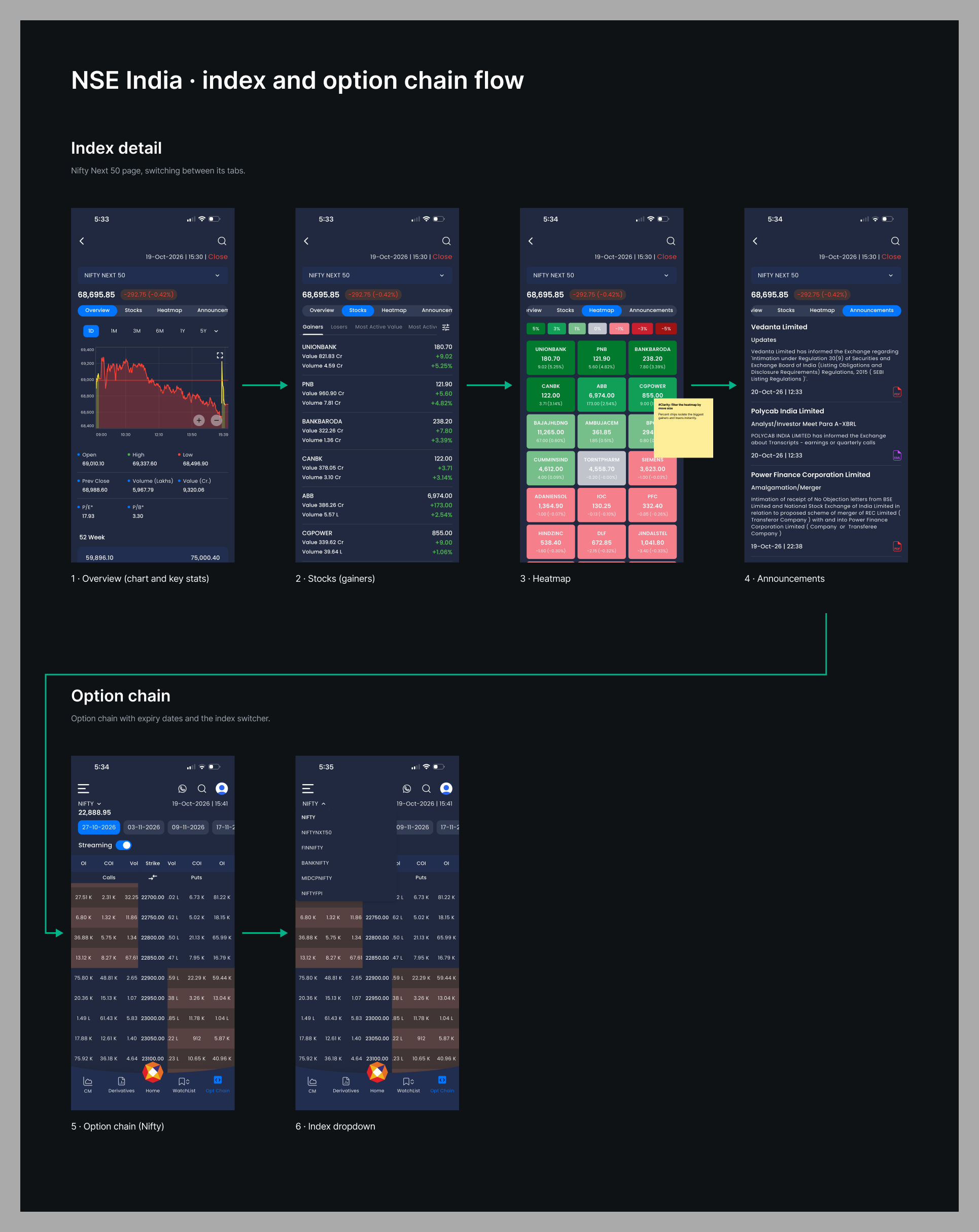
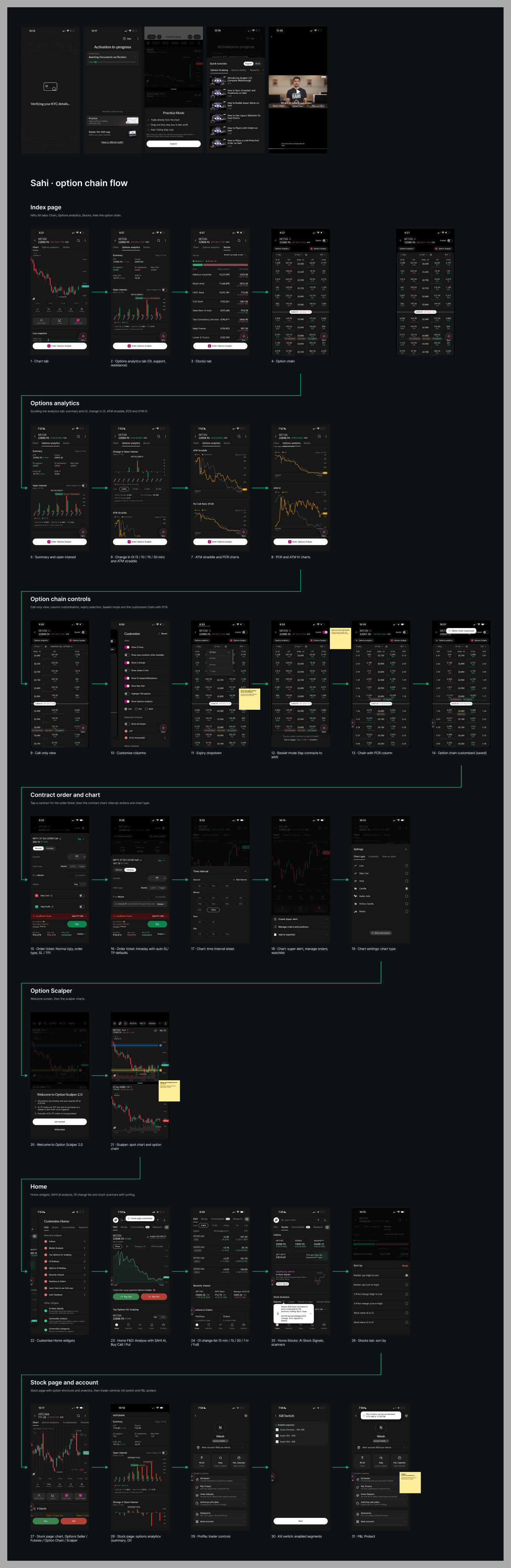
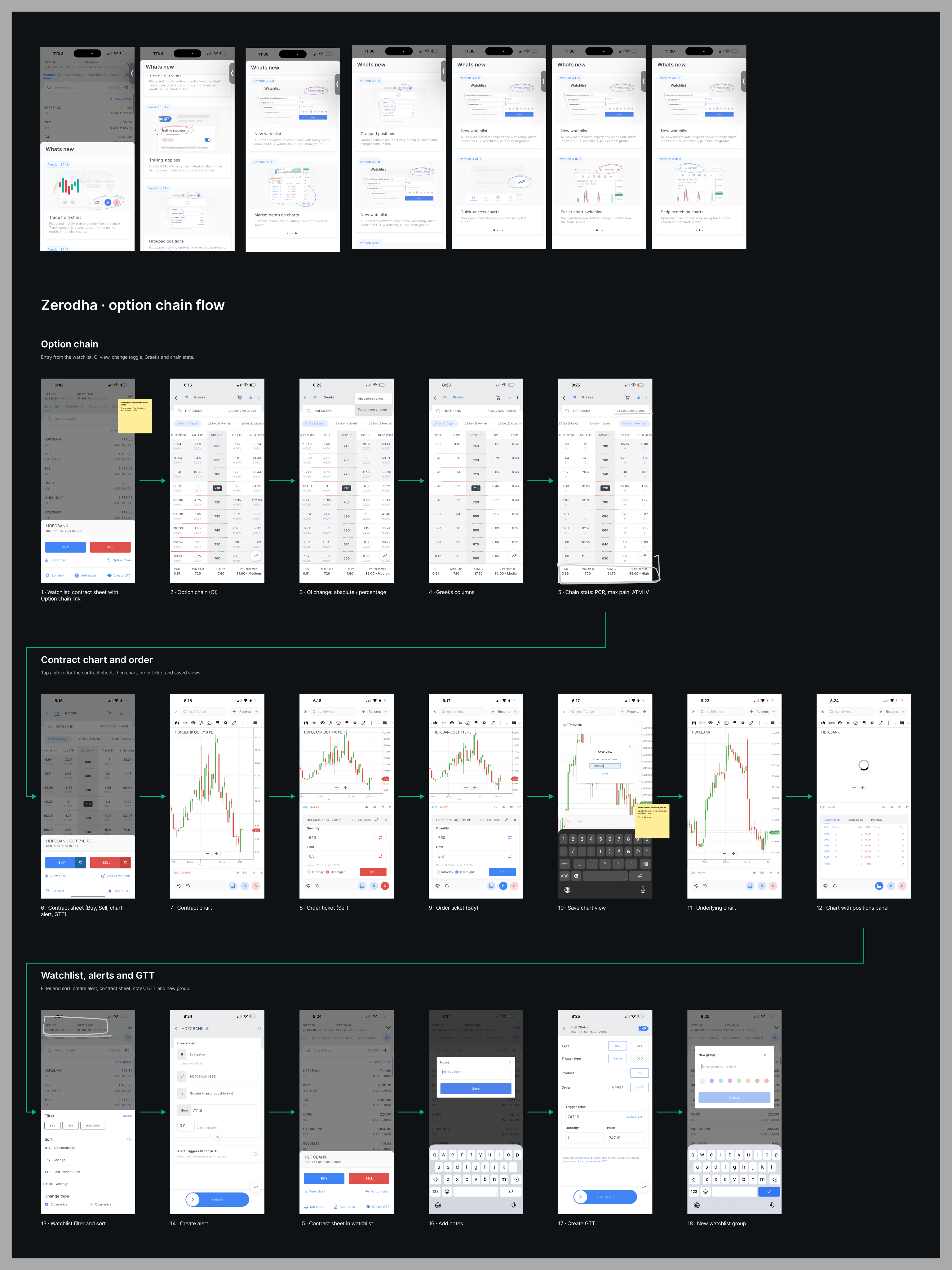
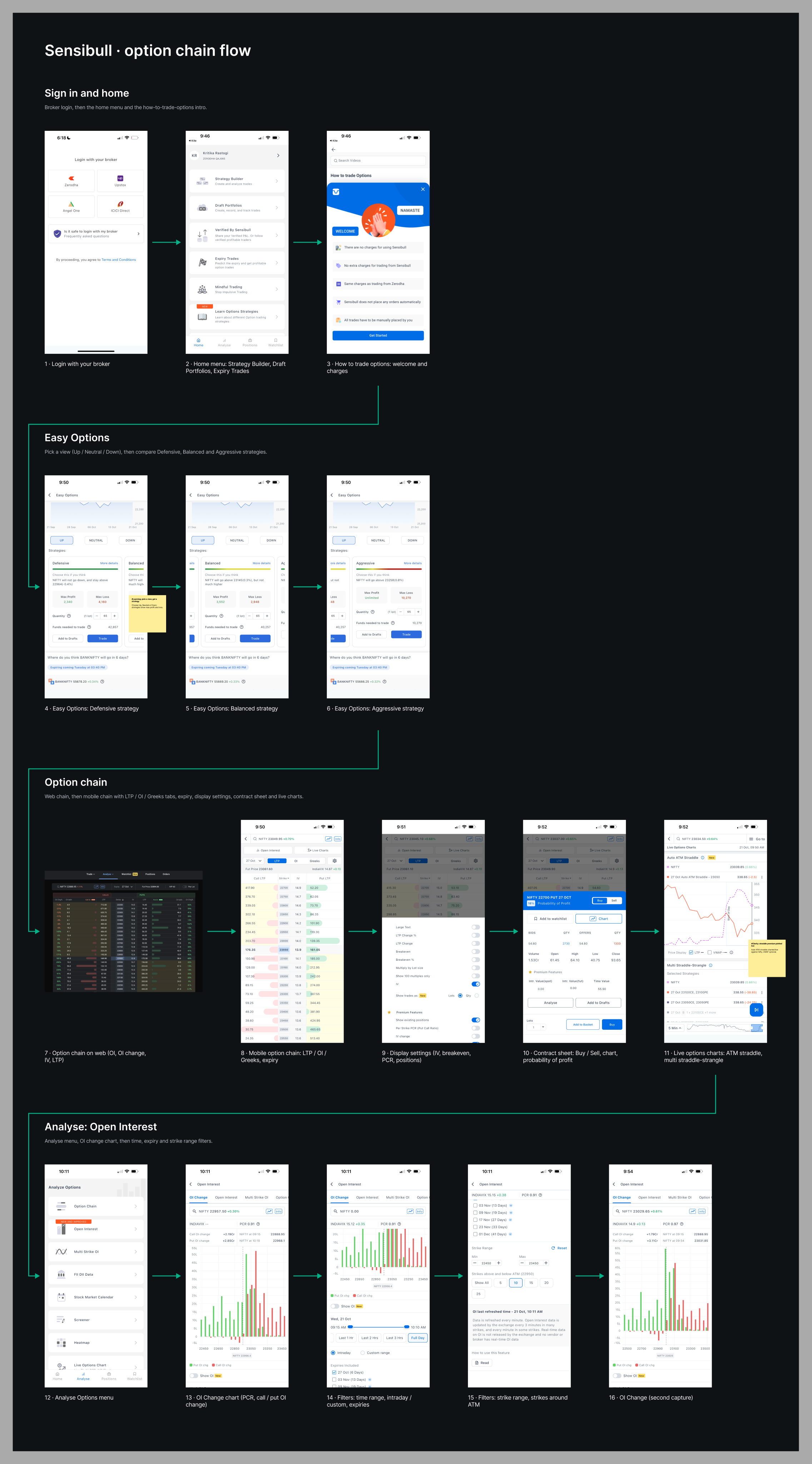
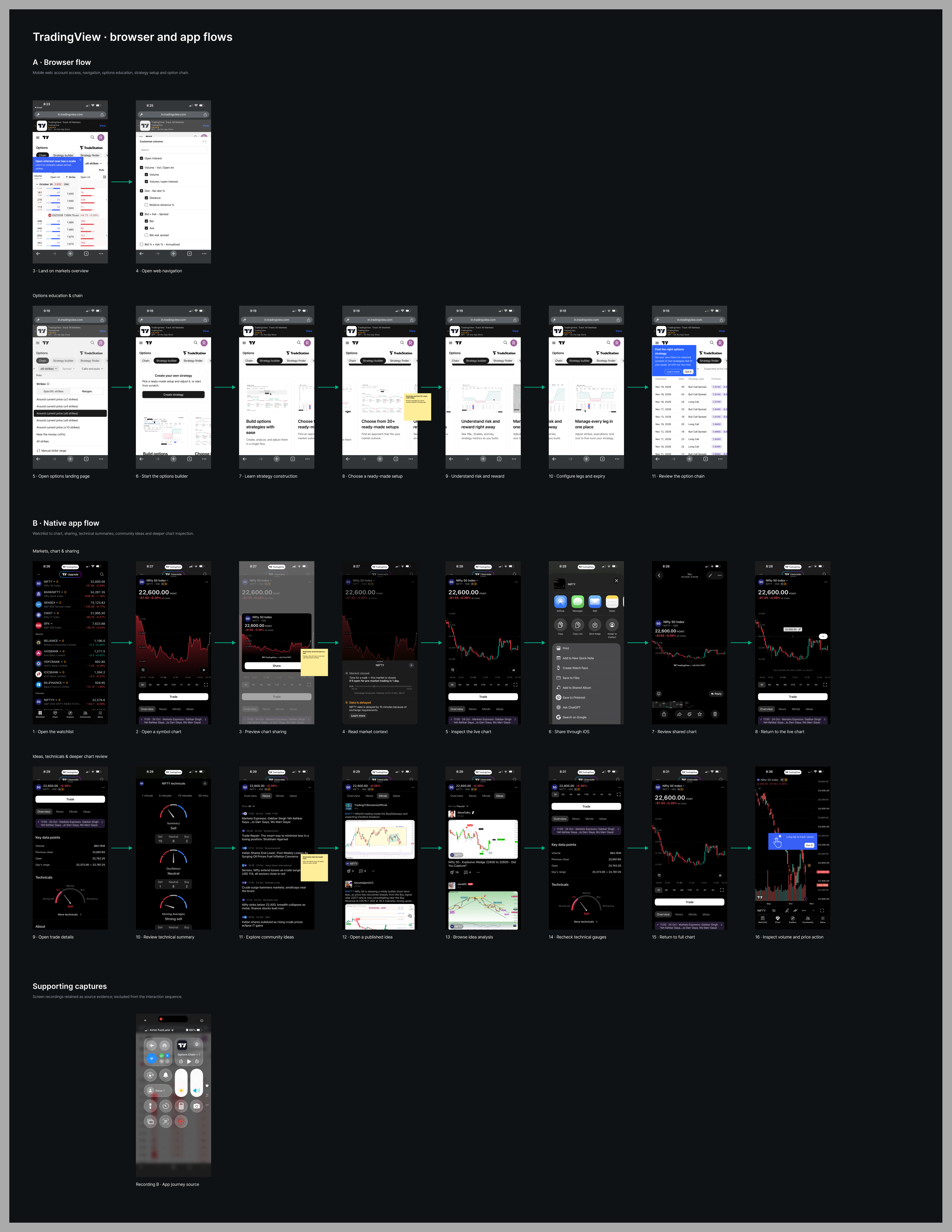
Benchmarked several competitors to find what makes each one fast, trusted and habit-forming, and where Smart Chain could stand apart.
A 30 minute call with the founder to understand why Smart Chain exists, how traders use an option chain, and where the product is headed: templates, a creator community and replay.
I interviewed 3 intraday index traders. They read levels, not numbers. They trust the AI only after checking it, and they use the phone to set, watch and get alerts, not to build.
1 in 3 tried it on a phone, fewer than 1 in 20 visits happened there, and only 2 built there.
Toggling rules is the top action (about 5,800 toggles). Users read ceiling and support, not numbers.
Trust breaks on the wrong index or expiry. Traders act on the AI only after checking it, and 13 hit a failed AI expression.
Sellers guard a range all day; scalpers chase a quick move. Traders also move between the two.
They sit on a spectrum. So some parameters will always be common. Beyond that, I had to make choices and trade-offs, and in many cases that means putting one persona first.
 Scalping buyer
 Writer or seller
Collect premium and stay inside the expected range for the day.
They see the range. Watchful and a little anxious: calm while the range holds, tense when a wall breaks.
Catch a 50 to 100 point move and get out clean.
They look for speed. Rushed and alert: afraid of missing the move, afraid of entering late.
The seller/writer is the most advanced persona and leads on mobile because they watch the chain all day on their phone and need the densest view. If that view works on a small screen, the scalper’s lighter one fits inside it. The scalper gets a door one tap away.
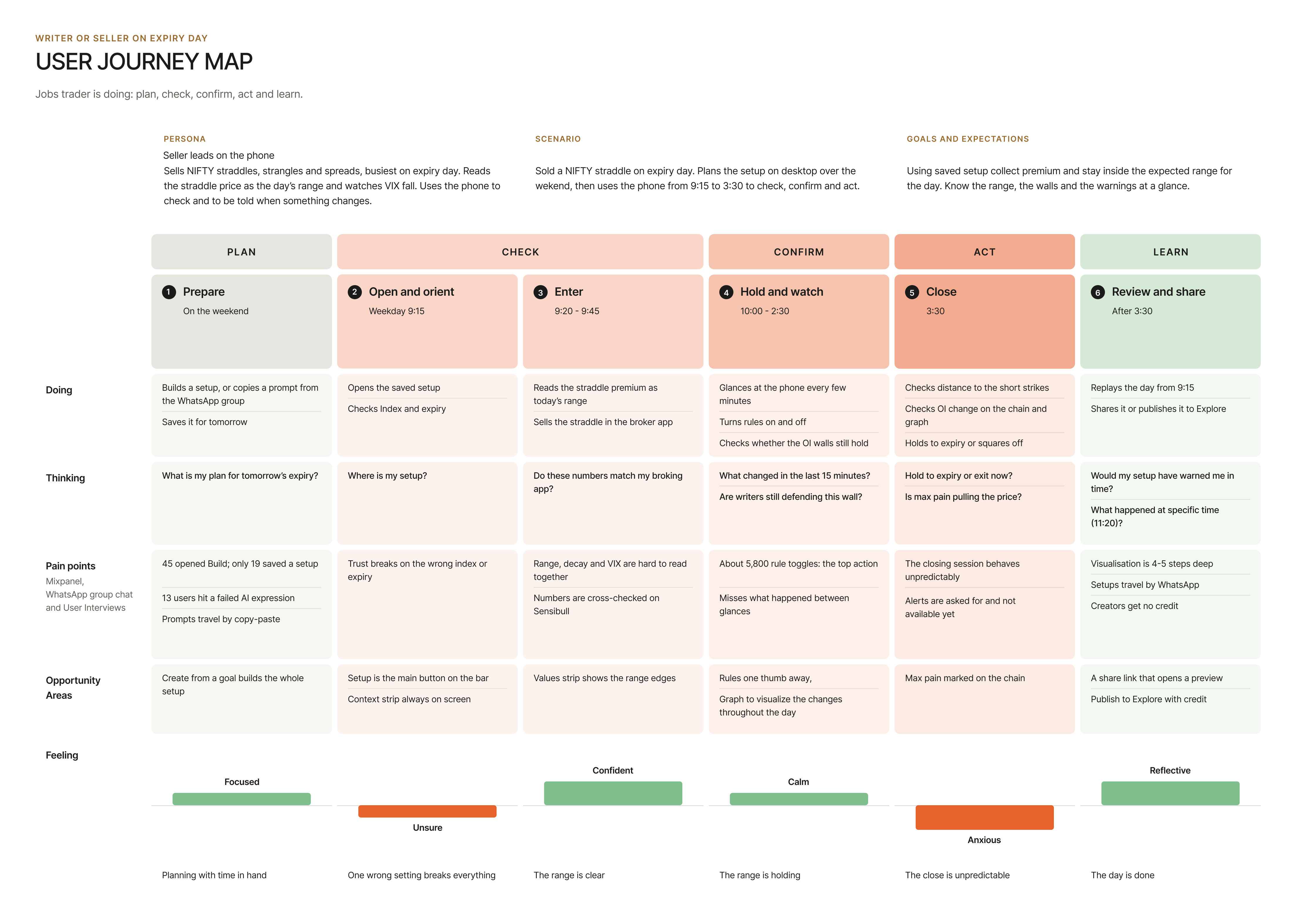
Pain points from the journey map:
Only 19 of the 45 traders who opened Build saved a setup, and 13 hit a failed AI expression. Many skip building altogether and copy prompts from the WhatsApp group.
A wrong index or expiry makes the whole setup feel wrong. Traders then check the numbers again on Sensibull before they act.
Range, decay and VIX are hard to read together, and the graph view is 4–5 steps deep. Traders have to work out the levels in their head.
Traders look at the phone every few minutes and miss what changed in between. Rule toggles are the most common action (about 5,800), yet they sit in the top bar, out of thumb reach.
Prompts are the product, yet they travel by copy-paste on WhatsApp. They lose their index and expiry on the way, and Tradl gets no reach from the sharing.
Traders build and test on desktop, then use the phone to check, confirm and act.
The advanced persona (writer/seller) leads on mobile.
They want the chain to tell them where the walls are, so they don’t have to stay glued to it.
One trader moves between styles during the day, so the chain has to switch with them.
Traders act on the AI’s work only after they can verify it themselves.
We believe that more traders will use Smart Chain on their phone (over 5% of visits) if the option seller can open their saved plan in one tap, without building the chain again, with Setup as the main button on the phone and Build second.
We believe bringing replay onto the chain, instead of 4–5 steps deep, lets traders see whether their levels held without watching all day, so they come back every week.
We believe toggles on the chain, with Refine with AI first and the formula under Advanced, let traders trust and adjust the AI’s build in one tap, so more of them save a setup.
We believe tinting the strikes each rule fires on lets sellers look away without missing anything, so they check in short, frequent looks.
We believe a share link that opens on the right index and expiry, with the creator’s name, lets followers load a proven setup, so setups travel inside Tradl instead of as prompts pasted on WhatsApp.
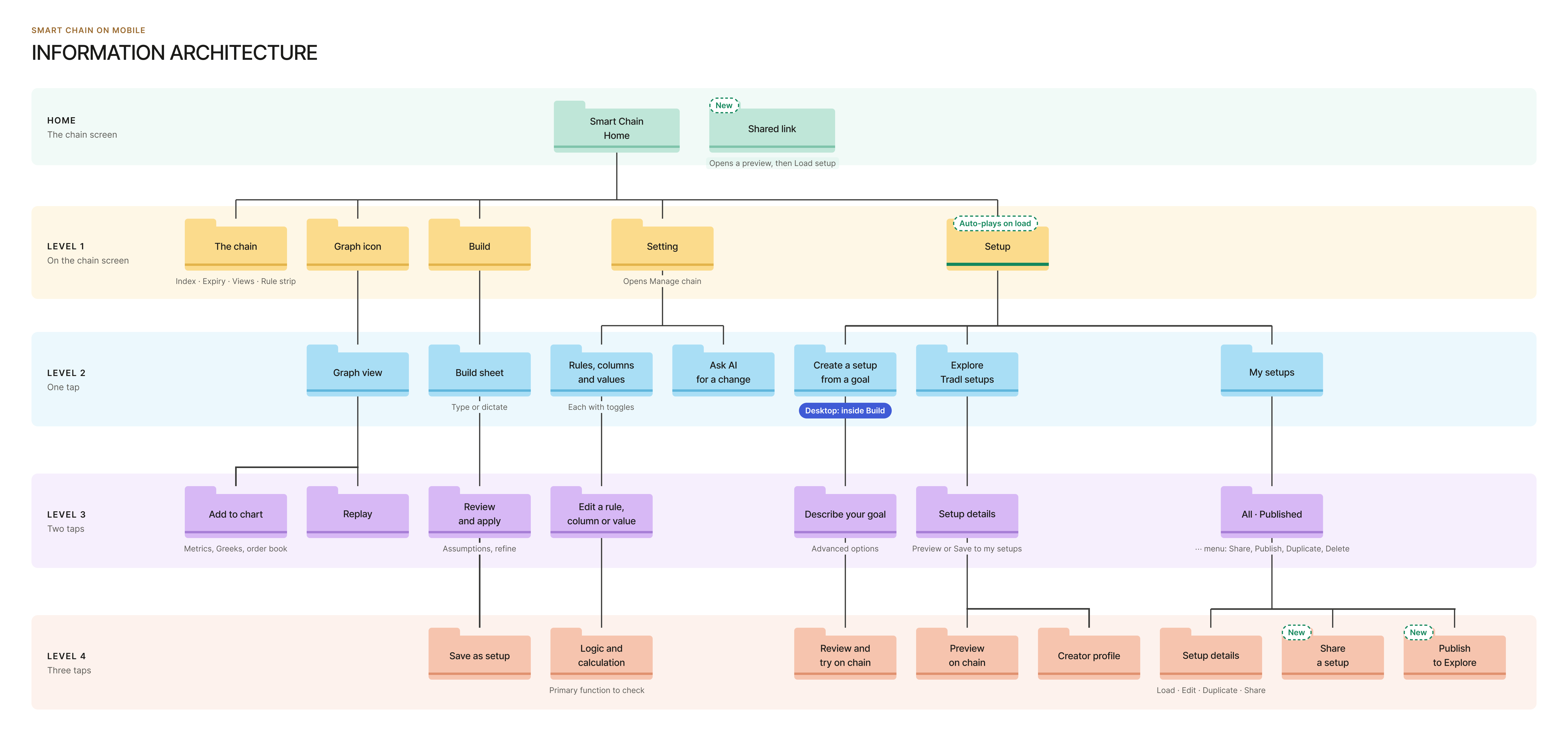
The hypotheses decided what moves closer on the phone: setups and replay come up front, while editing a setup stays a level deeper.
Option data is dense and the phone is held in one hand,
so three principles guided every screen.
Progressive disclosure. AI first, the formula on request.
Gestures and drawers. Edits open over the chain, and a swipe down returns the trader to the same strike.
One thumb. The parameters traders watch all day sit at the top of the chain. Setup and build sits at the bottom, within thumb reach.
Every other hypothesis assumes a setup is primary on phone. I’d check Mixpanel by device and time of day to see whether traders load desktop-built setups on their phone.
Replay helps traders catch up after the fact, but nothing warns them while they’re away. Sahi’s P&L Protect and Zerodha’s alerts show traders trust an app that watches for them.
Observe the lead persona writer/seller on expiry day. With more time, I’d observe 4–5 sellers through a full expiry day.